
By Layna Regina Oliveira de Souza
We live in a world where political and cultural divisions often shape how we see one another. Even within the Church, disagreements can make it difficult to recognize what unites us. In such a climate, an important question arises: How can the Church be a sign of unity in a polarized world?
As part of my Master of Arts in Ministry studies at Catholic Theological Union, I explored this question in my Survey of Systematic Theology course. Reflecting on the Church’s identity helped me understand that our response to polarization begins with remembering who we are as Christians.
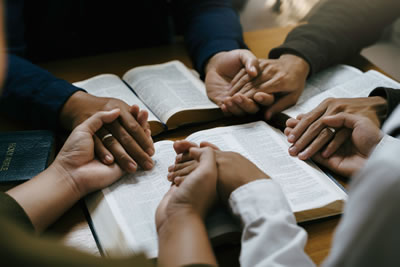 The Church is more than a human institution or a community of people who share the same opinions. As the Second Vatican Council teaches in Lumen Gentium, the Church is the People of God, the Body of Christ, and the Temple of the Holy Spirit. Our unity is rooted in our participation in the life of the Triune God. Through Baptism, we become members of one body, called to live in communion with Christ and with one another.
This communion does not mean uniformity. The Church includes people with different cultures, experiences, perspectives, and gifts. These differences need not be obstacles to unity; they can enrich our shared life. The challenge is to recognize that our identity in Christ is more fundamental than the political and cultural affiliations that can divide us.
How can we live this identity in everyday life? One important step is learning to listen. In a society where social media and political discourse often reinforce existing opinions, listening to someone who thinks differently requires humility and openness. It means recognizing the dignity of the other person, even when we disagree.
In campus ministry, this vision of the Church can take shape through shared prayer, small groups, dialogue, and service. When people from different backgrounds gather in faith, they have opportunities to encounter one another beyond their differences. Such encounters do not necessarily resolve every disagreement, but they can help build relationships grounded in mutual respect and Christian charity.
The Church’s growing emphasis on synodality also offers a sign of hope. To walk together means making room for different voices, listening attentively, and discerning how the Holy Spirit calls us forward as a community. This requires patience, humility, and a willingness to place the common good above personal preferences.
Unity is not always easy. It may require sacrifice, forgiveness, and the courage to remain in relationship when disagreement arises. Yet this is part of our Christian vocation. Jesus prayed that his disciples might be one, so that the world might believe (John 17:21). Our unity, therefore, is not simply for our own sake; it is also a witness to the world.
In a divided society, the Church is called to make this communion visible through ordinary acts of listening, dialogue, prayer, and love. By recognizing Christ in one another, we can begin to transform differences into opportunities for encounter and growth. Unity is both a gift we receive from God and a responsibility we are called to live each day.
