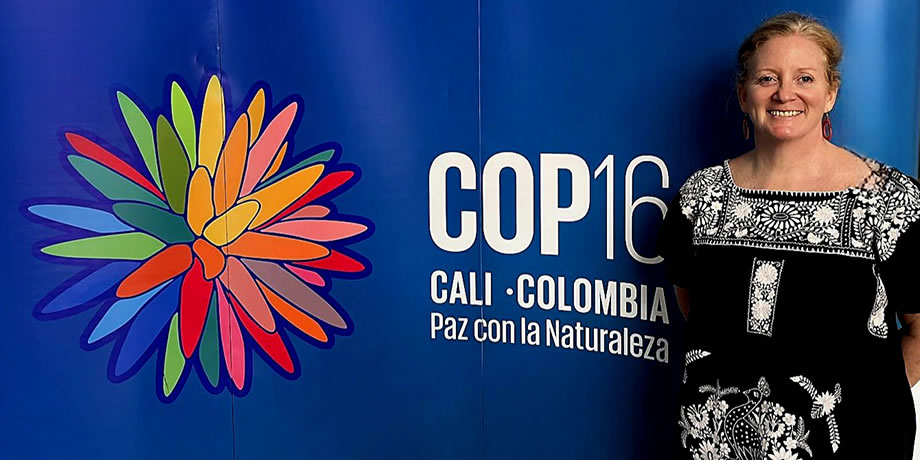
By Amy Woolam Echeverria
International JPIC Coordinator
On August 9, every year the United Nations invites people to celebrate International Day for the World’s Indigenous Peoples. To mark this occasion, I reflect on an important decision taken by the United Nations to approve a permanent Subsidiary Body on Article 8(j) under the United Nations Convention on Biological Diversity (CBD). I will explain what it is further below, but first I want to frame this decision not only as a policy achievement, but as a moment of healing, listening, and renewed responsibility. For Indigenous Peoples and local communities, whose knowledge and relationship with the land and sea have often been denied and dismissed, this decision offers a meaningful sign that the world may be learning to walk a different path. From a Catholic perspective, it speaks to the call to care for creation, to honor the dignity of every people, and to recognize that true protection of biodiversity begins with humility before those who have long lived in covenant with the land and sea.
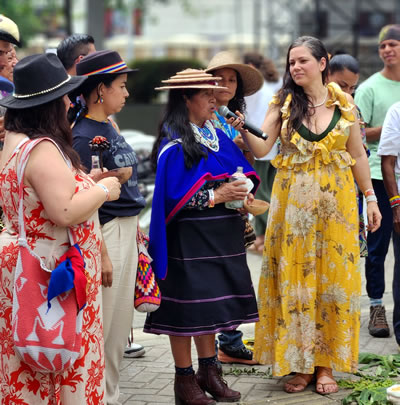 In 2024, while attending the sixteenth meeting of the Conference of the Parties (COP), I witnessed the historic and jubilant moment governments agreed to establish the Subsidiary Body on Article 8(j) and other provisions of the Convention related to Indigenous Peoples and local communities. The decision replaces the former ad hoc working group with a permanent institutional space, giving Article 8(j) a stronger and more enduring role within the Convention’s architecture. For many people, especially Indigenous Peoples, this achievement represents more than two decades of persistence, dialogue, and negotiation. It is not often that such joy is experienced at these global summits. To be there among hundreds of dedicated and courageous Indigenous leaders was nothing less than seeing God’s justice and love manifesting for the whole world.
How is Article 8(j) meaningful in practice? It calls on Parties to respect, preserve, and maintain the knowledge, innovations, and practices of Indigenous and local communities relevant to conservation and sustainable use. It also emphasizes approval, involvement, and equitable benefit-sharing. These commitments resonate with Catholic social teaching, especially the common good and the principle of subsidiarity, which insists that those most directly affected by decisions should have a meaningful voice in shaping them.
The significance of this success lies in its permanence. A standing body can provide consistent advice to the Conference of the Parties, collaborate with other Convention bodies, and keep Indigenous Peoples’ and local communities’ priorities visible across biodiversity discussions. In Catholic language, this reflects integral ecology: the conviction that care for nature, human dignity, cultural survival, and justice are inseparable. Protecting biodiversity means also protecting the peoples whose lives, languages, and spiritual traditions are bound to the land and sea.
This approval is also a synodal moment. Synodality, in the Catholic tradition, means walking together through listening, encounter, discernment, and shared responsibility. For too long, Indigenous Peoples and local communities have been invited into environmental spaces while still having to defend the legitimacy of their knowledge and rights. The Article 8(j) Subsidiary Body signals that their participation is not symbolic, optional, or temporary. It is essential to the future of the Convention itself.
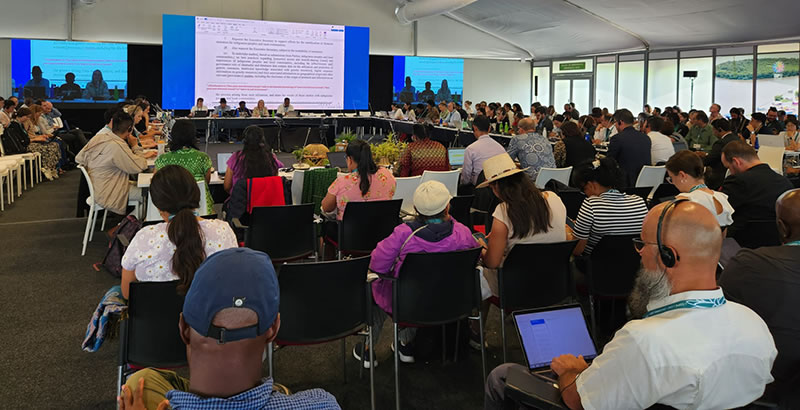
The decision also carries practical promise. It can support stronger national implementation, better coordination among focal points, improved monitoring of Indigenous and local contributions, and more inclusive approaches to conservation, restoration, sustainable use, benefit-sharing, and access to funding. If adequately resourced and designed with shared leadership, the new body can help bridge the gap between international commitments and realities on the ground.
Still, the approval of the Article 8(j) Subsidiary Body is not the end of the journey. Its success will depend on how the body operates, who is able to participate, whether women, youth, elders, and knowledge holders are supported, and whether Parties act on its advice. A truly synodal ecology requires interpretation, travel support, trust, transparency, respect for free, prior, and informed consent, and a willingness to listen before acting. A permanent body must be matched by permanent commitment.
Even so, this moment deserves recognition. The approval of the Article 8(j) Subsidiary Body affirms that protecting biodiversity is inseparable from protecting cultures, territories, languages, and rights. It honors generations who have carried knowledge forward despite exclusion and pressure, and it opens a new chapter in which Indigenous Peoples and local communities can help guide global biodiversity policy from a more secure and respected place.
In a time of accelerating ecological loss, the world needs decisions that are not only ambitious, but just. The creation of the Article 8(j) Subsidiary Body can be seen as a step toward ecological conversion: a movement away from domination and exploitation, and toward humility, listening, justice, and stewardship. It is a hard-won success, a promise of deeper partnership, and a reminder that the path to living in harmony with nature must be walked together.
