Plastic, Justice, and the Moral Test Before the World: Why a strong plastics treaty is a moral necessity.
By Amy Woolam Echeverria, Central JPIC Coordinator
Plastic pollution is often framed as an environmental or economic problem. For faith communities, it is also a moral and spiritual one. As nations negotiate a UN Plastics Treaty, religious leaders and grassroots networks are making a simple case: protecting creation, defending human dignity, and standing with the vulnerable all require an ambitious agreement.
That case begins with a conviction shared across many traditions: creation is sacred. Oceans, rivers, land, and all living beings are gifts entrusted to human care. Yet plastic pollution now reaches everywhere, from the deepest ocean trenches to the human bloodstream. For faith communities, this is not just a policy failure but a sign of a broken relationship with the Earth. It demands what many call ecological conversion: a turn toward simplicity, restraint, and right relationship with the natural world.
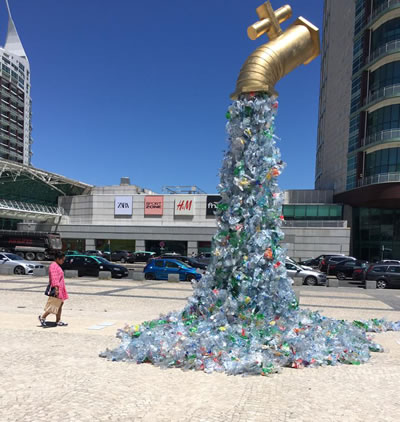
That is why faith groups insist the treaty address the full life cycle of plastics. Recycling alone will not solve the crisis. A credible treaty must curb production, redesign materials, eliminate toxic additives, and expand reuse systems. At the center of that agenda is overproduction, which drives pollution, climate harm, and environmental injustice. Faith coalitions have therefore called for steep cuts in virgin plastic production, a phaseout of single-use plastics, and policies such as Extended Producer Responsibility and deposit return systems that align economics with accountability.
Justice must also be at the treaty’s core. Plastic pollution falls hardest on low-income communities, Indigenous Peoples, Small Island Developing States, and countries across the global South. As the Columban water statement reminds us, damage to water systems is never abstract; it threatens health, sanitation, and daily life, especially for the poor. It also affirms that safe drinking water is a universal and inalienable human right, and that public policy and corporate practice must be judged by whether they protect or violate that right. A serious treaty must therefore provide strong protections, financing for cleanup and restoration, and a just transition for workers, especially waste pickers.
Faith actors also bring something politics alone cannot: moral authority and global reach. Through sermons, schools, parish networks, and public witness, they can move both conscience and action. The Columban Missionaries are part of that witness, linking care for creation with solidarity for communities most harmed by plastic pollution. Their work in education, advocacy, and defense of clean water shows how faith-based action can connect ecological concern with public responsibility.
The treaty process began in March 2022, when the UN Environment Assembly adopted Resolution 5/14 to negotiate a legally binding instrument on plastic pollution across the full life cycle of plastics. Since then, talks have moved through multiple negotiating rounds, but the resumed fifth session in Geneva in August 2025 ended without consensus. Major disagreements remain over binding global rules on production, chemicals of concern, financing, and implementation. The choice is now stark: a treaty built around voluntary national measures, or one equal to the scale of the crisis.
A strong UN Plastics Treaty is not only sound policy. It is a test of whether the world is willing to protect creation, uphold human dignity, and act before another generation inherits a crisis we already know how to confront.
