“I smelled the Spring on the smoky wind, dirty old town, dirty old town.”
These words from Salford songwriter Ewan MacColl’s classic 1949 ballad “Dirty Old Town” sum up the image of Salford in popular culture. Many see Salford as having been the perfect example of a Victorian mill town, with all the associated urban squalor, disease and pollution.
How fitting, then, that the Columban missionaries and the local diocese should choose Salford as the venue for their combined, day-long pilgrimage bringing “Hope for our Common Home.”
Poor old Salford. It seems to have suffered “the worst of both worlds” – sharing the grimy historical reputation of nearby Manchester without any of the sporting or cultural glamour of its more famous neighbor. Multiple artistic works have reinforced the image. Local author Walter Greenwood’s 1933 “Love on the Dole,” set in the Salford slum area of Hanky Park, is perhaps the defining British novel of the Great Depression. Salford artist L. S. Lowry immortalized the city with his distinctive mid-20th century pictures. In the 1960’s, many “kitchen sink” dramas of stage and screen were inspired by life in Salford, most notably the long-running soap opera “Coronation Street.” Of course, much has changed—the textile mills gone, the slums demolished, parkland extended, the state-of-theart commercial and media complex of Salford Quays constructed. Nevertheless, problems of poverty and pollution remain, added to by inter-ethnic tensions and some much-publicized outbreaks of racist violence. Hence, it felt so appropriate to make a statement of our Catholic values here, standing up for social justice and environmental protection—the two pillars that support our “common home.”
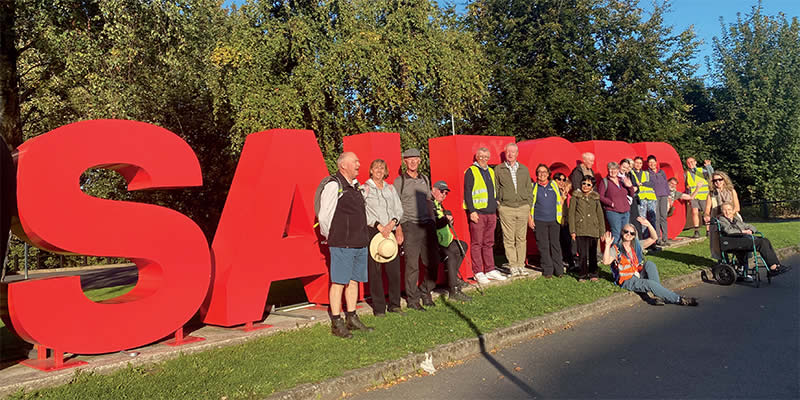
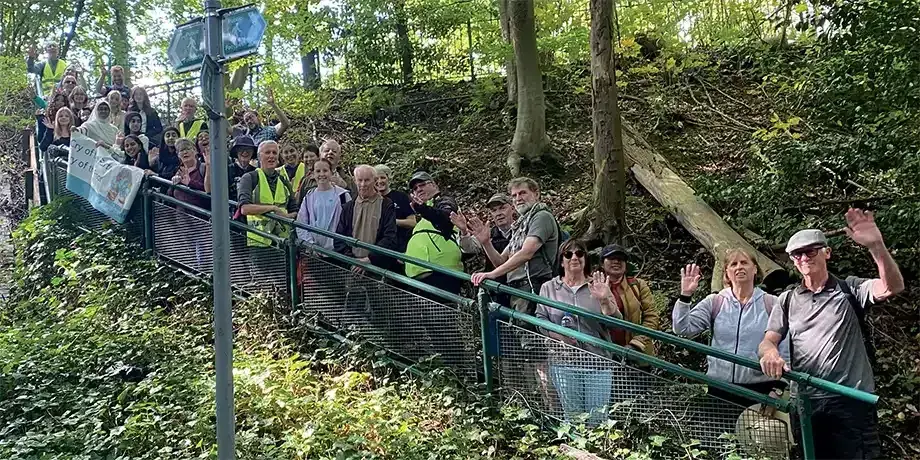
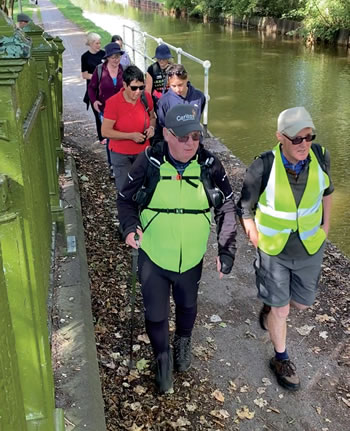
On a gloriously bright autumn day, we, some 40 pilgrims, assembled on the outskirts of Salford’s built-up area in the grounds of the diocesan Laudato Sì Center, which takes its name from Pope Francis’s ground-breaking 2015 encyclical. This ecological and retreat center has been developed under the gaze of Salford’s Bishop John Arnold, lead bishop for the environment in England and Wales. We then set a course for Salford Cathedral in the city center, passing through a whole range of landscapes, from suburban housing and industrial estates to parks and woodlands. We followed a reclaimed railway walk and the towpath of the Bridgewater Canal, the world’s oldest, built by James Brindley in 1761. We crossed motorways, negotiated underpasses and threaded our way through shopping centers.
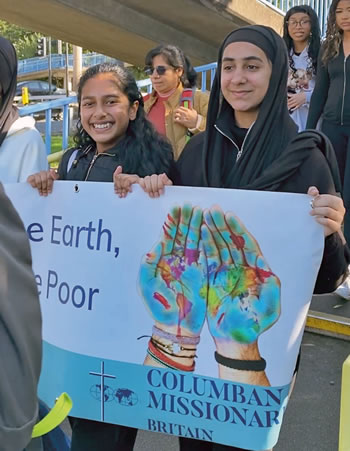
The pilgrims were as varied as the surroundings. We included Columban priests, lay missionaries, co-workers and volunteers, Emily from the Laudato Sì Center, Maltese Sr. Mary Anne, parishioners and Columban supporters from across the diocese, teachers and pupils of different religious and ethnic backgrounds from three high schools. One man walked with a stick, calmly informing us he was shortly to do a seven-day pilgrimage terminating in Rome. A lady accompanied us the whole way, pushing her elderly mother in a wheelchair! We had frequent “prayer stops,” two of them in Catholic churches hosted by their respective parish priests. Along the way, we exchanged experiences and life stories.
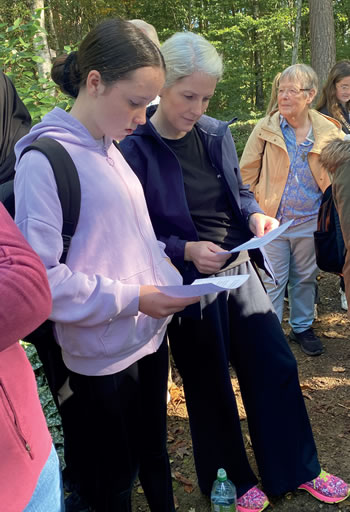
I felt we were making the perfect statement of faith, hope, care for Creation and unity in diversity.
Disturbingly, we couldn’t help but notice occasional flags of St. George draped over bridges or dangling from lamp posts. Apparently, these had nothing to do with support for English soccer or rugby teams, even less with St. George. Rather, they were evidence of ultra-nationalistic intolerance.
During the closing Mass in Salford Cathedral, presided by Bishop John, we gave thanks for a marvellous day but also reflected on how, just as with Jesus and His disciples on the lake, the boat that is our world is facing stormy waters. When the president of the most powerful nation on Earth calls climate change “a con,” when Muslims and Jews are attacked in our cities, when migrants are routinely condemned as ”the enemy,” when populist zealots seek to coopt national and religious symbols, then we know that gestures such as the “Hope for our Common Home” pilgrimage are going to become ever more necessary.
Jesus guided His disciples towards calmer waters. We trust and pray that He’ll do likewise with us. I was heartened by a phrase from one of the prayers we stopped to share during the pilgrimage.
“Creator God, let the sunrise remind us of your faithful promises, lifting our hearts to hope in your everlasting light.”
Columban Fr. John Boles lives and works in Britain.