People still ask me, “Do you miss it (Fiji), Father?” The answer is always “of course I do.” The reason why I do, is not always easy to explain. However, coming up to Christmas and parish preparations for the Holy Season stand out in my mind.
 During my last few years as a Columban missionary in Fiji, I was pastor of St. Pius X, Parish Raiwaqa. Raiwaqa Parish is the most densely populated, smallest and economically poorest parish in the Archdiocese of Suva. Raiwaqa, a parish on the outskirts of Suva City, grew out of the felt need by the housing authority and dynamic Columban missionaries like Fr. Dermot Hurley to provide affordable housing for low wage earners and for people coming into the city for work and for the education of their children back in the late 1960s. Living conditions haven’t improved much over the years, but more and more people kept coming. There are now five large squatter settlements within the confines of the Parish boundaries. I loved the four years that I spent there before returning home to Ireland.
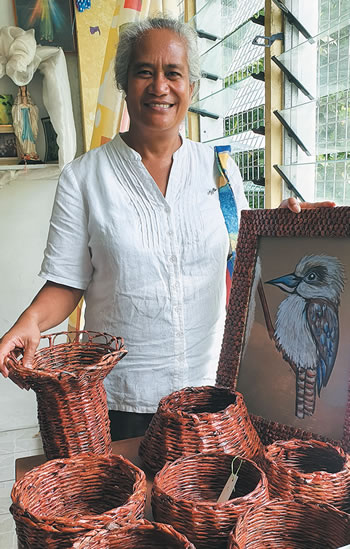
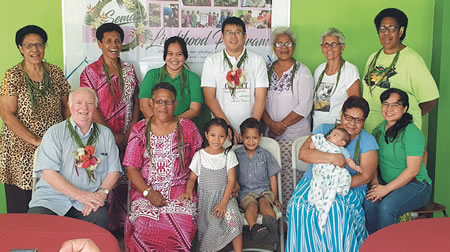
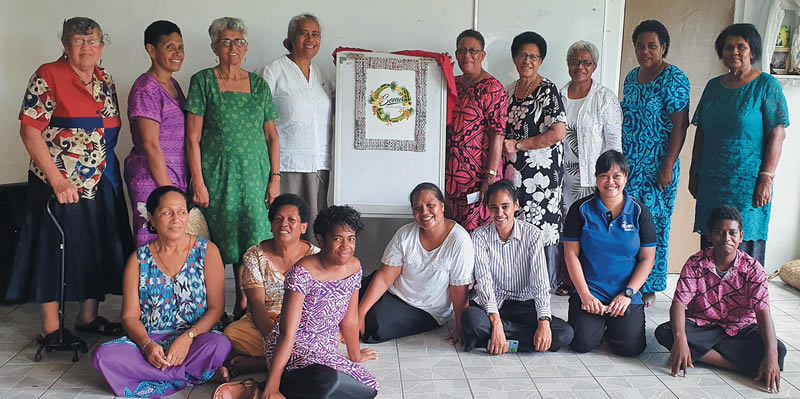
I was assisted by a team of well-trained lay leaders and a Columban lay missionary, Marjorie Engcoy from the Philippines. Marjorie was a creative and skilled person in recycling waste material into beautiful works of art. She trained the youth and the ladies of the parish to produce useful and usable products from things like plastic bottles and old newspapers, etc. She started a small organization called Sema for the women of the parish, which means “we together.” After sending their children off to school, these women had nothing to do in their homes — so they came along to the parish for companionship and to be taught new skills which would help them to be more sustainable and improve family standards in their homes. They also became efficient in backyard gardening, growing their own vegetables and plants for sale. The purpose of the Seme Project was to increase awareness and ecological conversion, after the call of Laudato Sí.
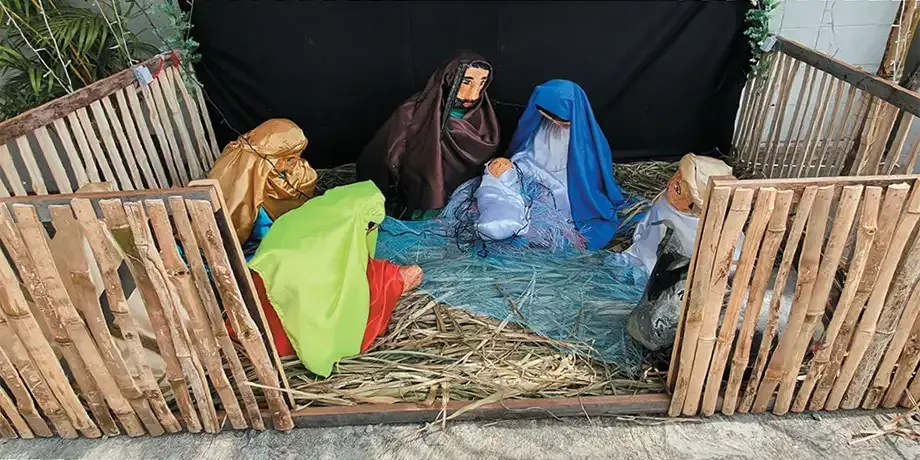
Christmas 2016 was special when Marjorie and the youth of the parish undertook to create an outdoor Eco Christmas Crib. This challenged the parish to hear the call for ecological conversion even louder. Ninety-five percent (95%) of the crib was made from eco-friendly and recycled materials. Marjorie, with the youth of St. Pius X, spent over a month creating the papier-mache statues, which were the main highlight of the eco-crib. The rest was built with scrap and used timber and bamboo strips; the statues were made of old newspapers; the Star was made from recycled plastic bottle cups adorned with LED lights.
Of course, another aim and purpose of the eco-crib was to evangelize and proclaim a deeper meaning of Christmas as opposed to what is advertised commercially. The crib was built outdoors to catch the attention of passers-by, inviting reflection on what humanity has done to its only home and pray for an open mind and heart to look for alternatives to halt the harm already done to our common home, the earth, so that the next generation may have a planet that they can call their home. The eco-crib got widespread attention and appeared in the local newspapers, as well as airtime on the local radio and television channels.
The eco-crib was blessed and lit on the day the parish held its parish carol night. A child was chosen to turn the lights on after the solemn blessing.
The parish carol service night is huge and is looked forward to by the entire parish. Each community or sector in the parish dressed in Christmas attire performs a few carols and brings along presents of foodstuffs for the members of the St. Vincent de Paul Society to distribute later to poor families around the parish and to those dwelling in the squatter settlements.
The parish choir can be heard practicing Christmas hymns and carols for weeks beforehand. The Christmas spirit is in the air long before Christmas night. The men of the parish spend at least a week cleaning the church from top to bottom – inside and outside in readiness for the Holy Night. The CCD (Catechism) teachers are busy training the children for their Christmas play — to be dramatized during the liturgy on Christmas Eve night, replacing the Gospel and sometimes even the homily!
The last few days before Christmas, I visit the sick and house-bound — many of them not living in comfortable conditions. They receive the sacrament of Reconciliation, and Christ will be born to them anew in the Eucharist. I am often accompanied by members of the St. Vincent de Paul with substantial food parcels, so they can also have a merry and blessed Christmas with the rest of us.
Christmas is family time, a time when absent members are remembered and when many return to be at home for Christmas. Raiwaqa is no exception. To prepare for the return of absent members, every small household erects a “vakatunaloa,” a makeshift lean-to covered with tarpaulin or galvanized sheeting to enlarge their small homes to make room and welcome for returning sons, daughters, and grandchildren. Turkey and ham will not be on the menu for the Christmas dinner, but every house will have a Lovo — where foodstuff, chickens, fish, beef and root crops are wrapped in tinfoil and coconut leaves placed on hot stones in an earth-type oven — covered again with more banana leaves and buried in the earth for about three hours. When it is dug out again, everything is perfectly cooked, and all the natural juices are contained in each dish served. Families sit around in their vakatunaloa or just outdoors under swaying palm trees, enjoying the season’s family feast of Christmas.
Do I still miss it? Of course I do!
Columban Fr. John McEvoy lives and works in Australia.
