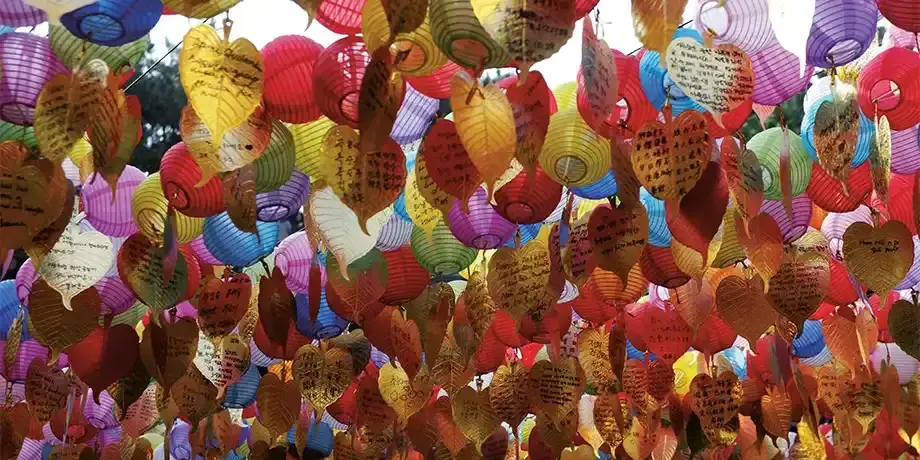
“Happy Buddha’s Birthday!” It is a greeting rarely heard in the Philippines, where nearly 80% of the country’s 110 million people are Catholic. Yet on the second Sunday of May 2025, the streets around Malate were filled with this joyful exclamation celebrating the birth of the Buddha. It was Buddha’s birthday, and a Korean Buddhist organization had organized a distribution of grocery packages to 200 families in the mission area of Malate Church. Since the day also happened to be Mother’s Day, many beneficiaries unfamiliar with the greeting responded cheerfully with “Happy Mother’s Day!” instead.
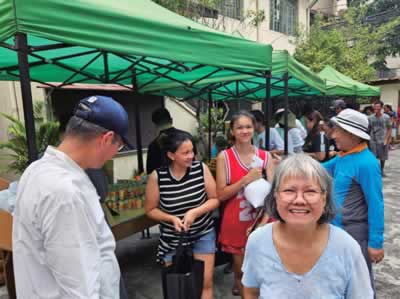 At that time, I had not yet been assigned to Malate Parish, but I was invited to the event not only because I was Korean, but also because it was an opportunity for me to meet the Korean supporters. I was also personally curious about the activities of this Buddhist group in the Philippines, so I gladly accepted. I wanted to understand what motivated them to cross religious boundaries and work under the scorching sun in an impoverished urban area, offering relief goods filled with care and compassion. That day became my first encounter with the Jungto Society.
The Jungto Society is a Buddhist lay movement founded by Ven. Pomnyun Sunim in Korea. It seeks enlightenment and a harmonious community through daily practice and mindful living. Rooted in the spirit of Mahayana Buddhism, it integrates spiritual practice with social engagement, focusing on three major areas: international relief, peace and reunification, and environmental protection. Guided by this vision, the Jungto Society established organizations such as JTS ( Join Together Society), Good Friends, and EcoBuddha.
Among them, JTS Korea — recognized with special consultative status by UN ECOSOC — operates under a simple yet powerful motto: “The hungry must be fed, the sick must be treated, and children must be educated.” This motto resonated deeply with me, as it echoes the Columban mission to prioritize the most vulnerable, the displaced and the marginalized. JTS has carried out humanitarian work without regard to religion or ideology, supporting impoverished communities in India, assisting children in North Korea, and building schools in remote areas across Asia. In 2019, they distributed 100,000 small gas stoves to Rohingya refugees in Myanmar, and since 2024 they have begun an environmental improvement project in Bhutan.
The Jungto Society also has a long-standing relationship with the Philippines. In 2002, Ven. Pomnyun Sunim received the Ramon Magsaysay Award (Peace and International Understanding), often called “Asia’s Nobel Prize,” for his humanitarian work across India, North Korea, and other impoverished regions. During the award process, His Excellency Most Rev. Antonio J. Ledesma, S.J., D.D., who served as liaison in the Philippines, introduced him to the severe poverty and conflict in Mindanao and personally requested JTS involvement there. This became the starting point of JTS Philippines.
Responding to the Archbishop’s request, JTS began working in Mindanao, focusing on education, healthcare, and peacebuilding. They supported schooling for children in conflict zones and assisted the most vulnerable like indigenous peoples and Muslim communities without discrimination. Beyond emergency relief, they invested in agricultural training, community development, and livelihood programs to help communities stand on their own. Also, from 2003 to 2025, they built 86 schools across six provinces (Bukidnon, Lanao del Norte, Lanao del Sur, Misamis Oriental, Maguindanao, and Agusan del Sur). When constructing schools in conflict areas, they often invited parents to help. Hearing the words “This school is for our children,” parents regardless of religion gladly joined the effort. In those moments, shared hope for their children’s future became a small seed of peace, nurtured through encounter, dialogue, and cooperation.
The Jungto Society’s connection with Malate Church also runs deep. In 2009, a priest visited a Jungto Society member who operated a business in the Malate area and asked whether he could help the local poor. The member discussed the request with other members, and together they decided to offer their support for Malate Church. Through this connection, the Jungto Society became linked with Malate Church and has continued its service ever since, preparing and distributing meals every Saturday in the parish’s meal program. When the pandemic began, they shifted from cooking to financial support, but their steady service beyond religious boundaries remains a powerful witness of compassion.
At the Buddha’s birthday event mentioned earlier, I first met Erica and Mr. Hur. Erica, with her bright voice calling out “Happy Buddha’s Birthday!,” and Mr. Hur, quietly organizing heavy grocery bags, were a Korean couple who had lived in the Philippines for 24 years. They were also among the long‑time volunteers who had been faithfully serving at the meal program. From that encounter, we stayed in touch. I was always fascinated by Erica’s stories about the Jungto Society’s teachings, her spiritual practice, and their various activities in the Philippines and worldwide. In return, I shared with them the teachings and structure of the Catholic Church, as well as the history and charism of the Columbans.
As we continued to share our faith and our lives with one another, I learned that the Jungto Society was hosting a photo exhibition on its work in Mindanao, and that Ven. Pomnyun Sunim would be visiting Manila for a public talk. Erica and Mr. Hur invited me to serve as a volunteer, and I helped with the event. Later, I invited them to the installation Mass of the new parish priest at Malate Church. It was their first time attending a Catholic Mass, and witnessing their openness and respectful curiosity moved me deeply.
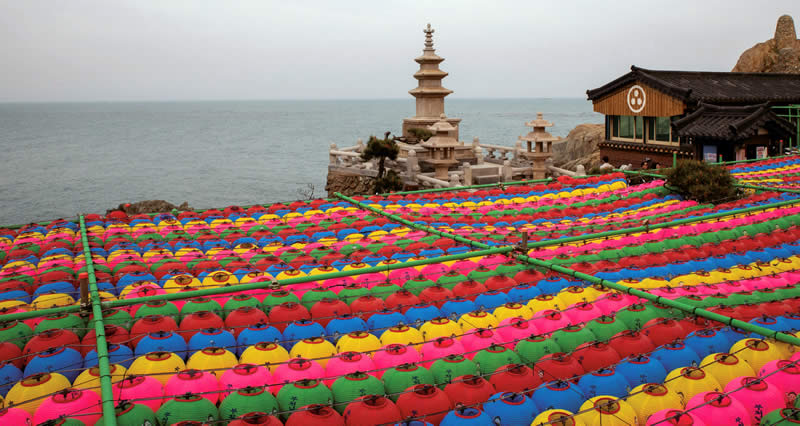
One day, I shared with Erica my concern about the containers used by the meal program beneficiaries such as cracked plastic boxes taped together, old red tubs donated six years ago, disposable ice cream containers, and even Styrofoam bowls. Beyond hygiene, I worried about the health risks of microplastics when hot food was poured into them. Upon hearing this, Erica immediately searched online for various stainless-steel lunchboxes, selected the most practical option, and sent them to the meal program office. She provided enough for the 100 current beneficiaries and an additional 50 for newcomers. Watching people carry warm meals in clean, safe containers, I felt a quiet sense of relief. Reflecting on the difference Erica’s thoughtful generosity made, a gentle gratitude filled my heart.
Over time, I came to see that Erica and Mr. Hur are people who seek to live meaningfully in the Philippines, where they have long made their home. They embody the teachings of the Buddha through their compassion, service, and genuine care for others. “I feel truly fulfilled when I can be of help to people going through difficult times,” they once told me. Their lives demonstrate a simple truth: to journey together, we must support one another.
We live in a world where people of different faiths coexist in many ways. Yet religion can also become a source of conflict, even war. It is difficult to understand why religions that preach love and peace so often clash. As Pope Francis emphasizes in Evangelii Gaudium and Fratelli Tutti, religion is called not to build walls but to build bridges. God’s goodness is present in different religious traditions, and interreligious dialogue and cooperation are essential paths toward peace.
The activities of the Jungto Society also embody this spirit of building bridges. JTS has consistently reached beyond religious and ideological boundaries, supporting impoverished communities in India, providing gas stoves to Rohingya refugees, and assisting Indigenous and Muslim communities in Mindanao, Philippines. These efforts testify to a commitment that places human dignity above differences in faith. Through such work, the Jungto Society quietly yet powerfully shows what becomes possible when people of different religions collaborate for the common good.
I, too, have learned through my friendship with Erica and Mr. Hur that this teaching is not an abstract ideal but something that can be lived out in daily life. Though we come from different faiths, we share the same desire to serve those in need. Our religious differences have never been a barrier; instead, they have become a pathway for understanding and learning from one another. As we replaced food containers together and worked to bring small improvements to the meal program, the fact that we belonged to different religions no longer mattered. What mattered was the shared intention to make someone’s life a little warmer.
Ultimately, I believe that seeking ways to acknowledge our differences and live in harmony is a task entrusted to people of faith in our time. Small acts of solidarity show that religion need not be a source of conflict but can become a bridge that connects us. And such bridges are not built through grand declarations, but through the quiet gestures of kindness and care that we choose each day.
Columban lay missionary Noh Hyein Anna is from South Korea. She currently lives and works in the Philippines.
