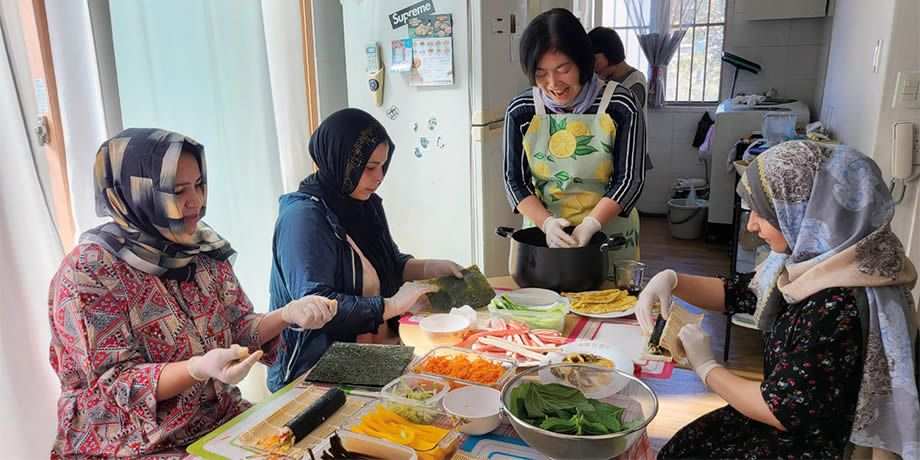
I live in a neighborhood where migrants and asylum seekers dwell side by side. One section has already been vacated due to redevelopment, and all access routes have been sealed off. These changes weigh heavily on the hearts of our migrant neighbors, stirring anxiety about relocation and the burden of higher rent in an uncertain future.
 In this unsettled place, I’ve been visiting my neighbors—migrants and asylum seekers—and slowly becoming part of their lives. People from various countries in Africa and Asia with different religions live here. While the area may seem quiet and ordinary, stepping into their lives reveals a rich tapestry of cultures. Living among such diversity, learning from one another, and respecting different traditions is deeply meaningful. Yet, as a fragile human being, I also face challenges. Differences can bring discomfort, and understanding takes time.
I’ve rented a two-bedroom unit here to offer temporary shelter—up to six months—for asylum seekers in urgent need. I remember one Arab woman who lived with me. We shared all common spaces outside our rooms. Navigating our differences in lifestyle, food, and worldview wasn’t always easy. Even grocery shopping required thoughtful consideration to respect her preferences. Our backgrounds were vastly different, and learning to understand each other took time, patience, and grace.
Yet through that shared experience, I witnessed the quiet beauty of hospitality—where love is expressed not just in words, but in the willingness to make space for someone else’s story.
One day, I heard Jesus whisper: “Lower your expectations. Empty yourself. Only then will peace enter your heart.” His words humbled me.
She had fled her country after threats to her life for defying conservative Islamic norms. Rejected by her family, she arrived in Korea not by choice, but by circumstance. Three years had passed, and the only official documents she held were a passport and a deportation deferral notice stamped “not permitted to work.”
Despite these limitations, she had to survive. She worked illegally in a factory until a back injury forced her to quit. Later, while washing dishes at a restaurant, she slipped and severely injured her shoulder. Unable to do physical labor, she struggled even more to find work. Still, she remained determined to live independently, searching tirelessly for any opportunity. On fortunate days, she secured a few hours of parttime work. She longed to leave Korea, but no country would accept her. Returning home was not an option; her life would be at risk.
Living among such diversity, learning from one another, and respecting different traditions is deeply meaningful.
Watching her struggle filled me with sorrow and helplessness. Sharing space and daily life often led to tension. When promises were broken or responsibilities neglected, I felt disappointed and angry. One day, I heard Jesus whisper: “Lower your expectations. Empty yourself. Only then will peace enter your heart.” His words humbled me. I saw my own limitations and brokenness. Yet I continued to pray for her happiness, hoping she would see God’s love and care through me and find comfort in her journey.
As a missionary, I’ve received abundant blessings and love over the years. I’m deeply grateful for this life and remain committed to sharing the love I’ve received. I hope those I meet can escape loneliness and isolation. I want them to live free from prejudice and injustice. For that to happen, we must look at them with the heart of Jesus—welcoming them as fellow members of our communities.
Pope Francis once said, “Migrants and refugees must be welcomed with love.” To me, this means we must not remain passive observers. We must actively reach out and extend our hands. Love must be lived. Beyond discomfort and indifference, our willingness to carry our own crosses and offer hospitality to the poor, the powerless, and the marginalized becomes a beacon of hope—a light sent by the Lord to guide them toward new life.
The love and welcome we show to migrants can restore dignity, empower them to live, and allow them to experience the Kingdom of God. We must not discriminate, but embrace them as fellow human beings—our brothers, sisters, and neighbors— worthy of love and respect. This is how we live out Jesus’ command: “Love your neighbor as yourself.”
Columban lay missionary Lee Kyung Ja, Christina lives and works in South Korea.
