Mountains have a natural religious significance in that they seem to bring us closer to the transcendent, to ecstasy and to God.
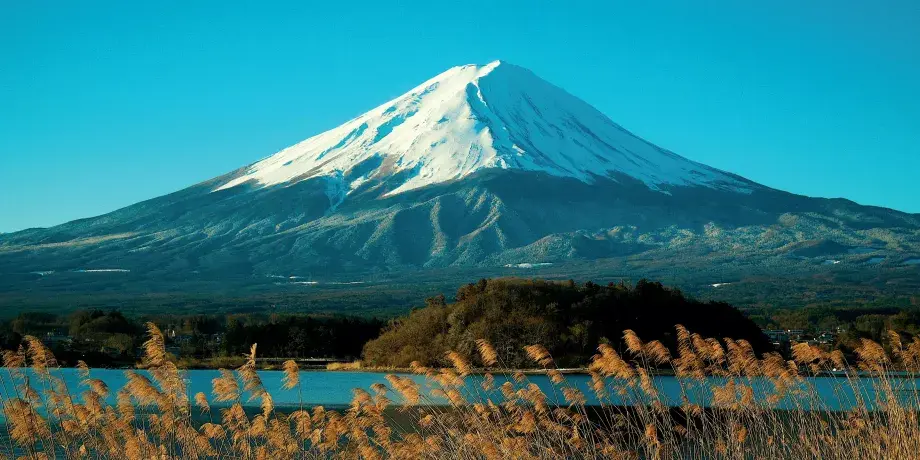
Mt. Fuji, at 12,388 feet, is the highest mountain in Japan. Its location in central Honshu is only about 60 miles west of the Tokyo-Yokohama metropolitan area. It is a classic volcano with a large crater in the center, and it has been dormant since 1707. It is certainly one of THE sights to see in Japan and is considered a holy place in the Shinto religion.
The Japanese have a proverb that says, “You are a fool if you never climb Mount Fuji and you are a fool if you climb it twice.” I am a fool of the second type in that I climbed Mount Fuji twice!
The first time was very early on in my time in Japan, September 29, 1973, which was exactly one month after my first arrival. The group I was going with apparently did not know that, for good reason, there are rules about when you can climb and when you are advised not to. The climbing season is short, just a little over two months, and does not extend past September 10. After that date, you may encounter dangerous high winds.
Despite being outside the climbing season, it turned out to be a fine day. We drove up to the fifth station and parked and headed up the mountain from there. Although Fuji is the inspiration for many artistic scenic pictures, up close, it is a disappointing sight: a huge pile of cinders! I suspect that is the reason that, as the saying goes, “…you are a fool if you climb it twice.”
Anyway, we made it to the top and were able to descend more quickly than we went up. I did not know it, but I was in for a treat: my first Japanese bath. It felt great to ease my tired legs and torso into hot water up to my shoulders. Relaxation at its finest!
My second “foolish” trip to the top of Fuji came almost three years later. By this time, I had heard one or two horror stories about mishaps that can happen outside of climbing season. This second trip followed the rules and was probably less foolish than the first. We climbed almost to the top in the evening, so that we would be in position to get to the top in time to see the sunrise on the morning of July 1. We stayed for a few hours in one of the huts along the route and successfully made our way to the top to greet the sun emerging from a sea of clouds. One of the priests had carried a Mass kit, and we had Mass at the summit, breakfast and a little rest before starting down the long slope.
What a privilege it was to be on this holy mountain that is associated with Moses, the Exodus from Egypt, the gift of the law and the appearances of God to Moses.
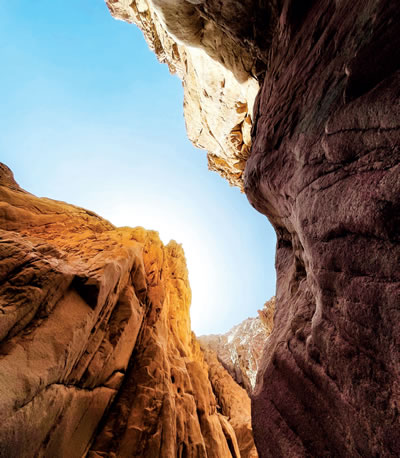
The other mountain trek that I thought I would mention was the climb up Mount Sinai. A few years ago, after twelve years in administrative jobs for the Columbans, I had the wonderful opportunity to do a sixweek sabbatical program at the Tantur Institute in Jerusalem. One of the high points of the program was a trip to the Sinai Peninsula with the opportunity to stay at the famous Orthodox monastery of St. Catherine at the foot of Mt. Sinai. After exploring the monastery and its environs by day, I went to bed early on the second night we were there and got up in the middle of the night and started climbing, so that — as on Mt. Fuji — we would be in a position to see the sunrise from the top of the mountain.
What a privilege it was to be on this holy mountain that is associated with Moses, the Exodus from Egypt, the gift of the law and the appearances of God to Moses.
The morning light revealed the harshness of the terrain all around us. And everyone who was there to witness the morning spectacle seemed to be in a good mood and yet absorbed in his or her own thoughts and closer to the transcendent.
Columban Fr. John Burger lives and works in the United States.
