From the Director
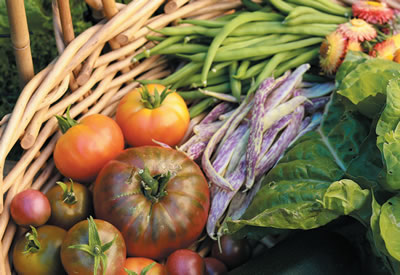
The last four years I was in Korea, I was blessed to be able to live in a community of Columbans—three Sisters, a lay missionary, and myself, the priest. We lived in a rural village of about 55 families, all farmers, about five Catholic households, the rest professing no faith or religion, except a few Buddhists. The vision for our community was to be like a little garden, each of us a different type of flower, growing among our neighbors. Each of us had different talents and interests, but we were also fellow-farmers with everyone else. Our style was organic, living in harmony with the earth. We took great care in using cut weeds and chopped rice straw and newspapers as mulch and pig manure from a neighbor as our fertilizer. No one else in the village was doing that. We hoped that our example (long before Pope Francis’ Encyclical “Laudato Sí” came out) of seeing ourselves as part of creation rather than masters of it, would cause our friends to think about it. We also used the stuff from our outhouse (after it was composted) in our own garden as well and had the biggest cabbages in the village.
This is the expression of a faith rooted very much in the earth, and life, a vision of a God who does not just sit on a golden throne issuing decrees and judging us (as we find in the Book of Revelation), but is very involved in the life of the world that God created and asks us to live in, caring for it, enjoying it, loving it and being nourished by it—the God of Creation, the God of Jesus who is with us (Emmanuel) and understands us and our life.
We were there not so much as missionaries of our religion, but of our faith. Faith and religion are certainly connected, but they are also different. In our four years there, only one person was baptized as a Catholic. That was fine with us. Hopefully, some neighbors came to see the natural world a little more as a friend and ally than just a resource to be used at will.
The vision for our community was to be like a little garden, each of us a different type of flower, growing among our neighbors.
I also had a great experience of learning to have faith in our good God. One of the elderly women who was a Catholic, called “Ta-du Om-ma,” was a very thin widow, 74 years old, with only a few teeth in her mouth. She cared for her son who was paralyzed from a stroke and lived on the floor of her house for several years until he died. To support herself, Ta-du Om-ma worked as a day laborer, as did many of us who had more time than fields to work. Others in the village needed help with their planting, weeding, harvesting, etc., and we would work with them for a day for so much money. Ta-du Om-ma had no land of her own, and we had only a small plot, so we often worked together for others. Since the parish priest did not want me to say Mass in the old, little chapel in the village, we took the bus on Sunday mornings into town for Mass. At the collection time, I noticed that Ta-du Om-ma was putting in 10,000 Won while I was putting in 5,000. As an older woman she was paid 5,000 won for her days work while I, a man, was paid 10,000. I felt that half a day’s wage was a fair donation at Mass, but she gave twice a day’s wage. Wow, what a generous person was she. And what faith she had. God would see and bless her. She had no doubt.
Ta-du Om-ma has passed on now but this little but great example of faith and generosity has stayed with me for all of these years. “Blessed are you who are poor, for the kingdom of God is yours; but woe to you who are rich, for you have received your consolation.” (Luke 6:20,24). Experience is the root of wisdom. Our experience of a life-giving God helps us to be wise indeed.
