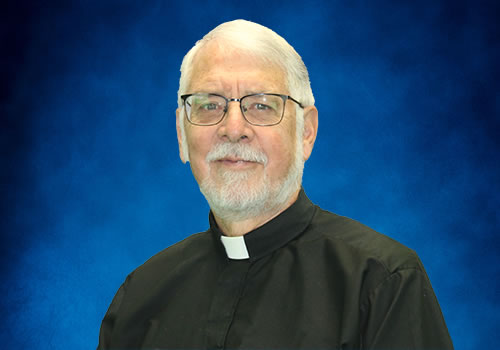
From the Director
What is the “spirituality” of the Columbans? “Spirituality cannot be understood simply as an individual and private relationship to God. Our response to God takes place within the community of faith. . . communal reflection on the word of God, attention to the tradition and teaching of the Church, etc. Spirituality encompasses every facet of our being.” (Spirituality of our Founders by Fr. Jim McCaslin.)
Catholic Ireland of 1916 was a world suddenly caught up to look out to the millions of unevangelized in China. In their own suffering, the Irish were certain of the great love that God had for them and their faith in that. Their vision was such that they considered that no sacrifice was too great to win the world for Christ, even as they were fighting for their own independence from England.
The men who founded the Maynooth Mission to China (now known as the Missionary Society of St. Columban) did not see themselves as creators of a new spirituality. They were simply secular priests who came together to form a society for mutual support, the glory of God, their own sanctification, and the salvation of the Chinese people. In the process, they did, in fact, create a new spirituality. Each was devoted to the person and mission of Jesus Christ and the dream that all people everywhere should know, love, and serve Him as they did. They were very diverse and of strong character. Their strengths and weaknesses caused no little misunderstanding and disagreement among them in those early years. Yet something great and unique and precious in the life of the Church was the end result of their coming together to form this Society of St. Columban, an Irish missionary monk.
Edward Galvin was ordained for his diocese of Cork in 1909, but went to Brooklyn, New York, for three years, where he met a Canadian priest, John Fraser, who had been working in China. He followed him back to China and worked there from 1912 to 1916. He returned to Ireland with two friends just after the Easter Rising against England. The Irish bishops and Rome gave him tentative approval to found the Society in 1916, and he came to Omaha, Nebraska, to start a house to raise money for support of its work. In 1920, Rome gave final approval and a territory in China to be responsible for. Fr. Galvin led the first group of sixteen Columban missionaries back to Hanyang. In 1927, he became the bishop of Hanyang. After laboring so valiantly for 32 years amid frightful turmoil caused at times by bandits, Communists, floods, refugees, the Japanese war and dire poverty, he was expelled by the Communists in 1952 as “an enemy of the people.” Although terminally ill with leukemia, he spent himself for many months in the U.S. drumming up support to have St. Columban placed on the universal Church calendar. He returned to Ireland in 1954 and died in 1956 in Dalgan.
John Blowick was ordained in 1913 for the diocese of Tuam and was appointed professor of Dogmatic Theology at Maynooth when he was only 26 years old. He was troubled that he wasn’t doing enough to make the Church truly universal and decided to offer himself to China when he was free from personal obligations. When Fr. Galvin came to Ireland, he volunteered to join the new group. Being a professor at Maynooth, he was recognized by the small new group as leader and spokesperson with the bishops of Ireland and Rome. He formed the first seminary for the Columbans in Galway and became the rector. He was elected the first Superior General and went with the first group to China to negotiate the handing over of Hanyang to the Columbans from another congregation. In 1922, he founded the Missionary Sisters of St. Columban and in 1926, the Columban Brothers. He remained in leadership roles until his death in 1972.
Over the ensuing years, 24 Columbans have been martyred because they were faithful to God and their people, in China, in the Philippines, in Korea, in Burma, in Peru. The spirituality of the Columbans is seen in how they live with their God, with their people, with their world, amidst many tears and fears and joys and celebrations, weak sinners, struggling to do the best they can, trusting the Holy Spirit to make it all work out for the Kingdom of God.
