From the Director
“It ain’t like it used to be.” How often have we heard that one? And it’s usually true. I joined the Columbans in 1976, wanting to go overseas to some poorer country and try to make a difference. Then I found myself in Korea at a time when it was rapidly expanding its economy. It was impossible to turn around and not see some new high-rise apartment buildings, additions to the subway system, road expansion, etc. When I was in Wonju in 1979 as a seminarian, the church was so cold in January that the water the priest used to wash his fingers at Mass had ice on it. The church was heated with two stoves burning sawdust from a local mill. Something to write home about! But now “it sure ain’t like it used to be.”
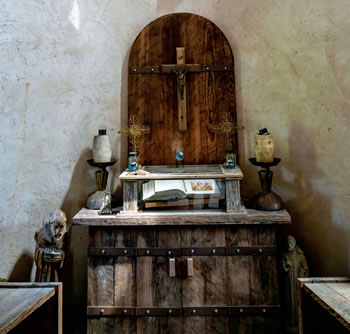 We often equate missionaries and poverty. There are still millions and millions of poor people living in the world, that’s for sure. And our missionaries still serve them. But the world is changing. Many needs are changing, too. All countries have their poor people, even the U.S. But poverty is seen in different ways in different places. And there are the “poor” and the “poor-in-spirit.” Not all poor are poor in spirit, and not all poor-in-spirit are poor. But there is a connection.
I want to be poor-in-spirit, so the Kingdom of God will be mine as Jesus promises. This kind of poverty is a simplicity, a humility, a willingness to recognize that I have enough and don’t really need or want any more. When we lived in our mud house in Korea, one of the last remaining in that village, we thought we were living simply. But neighbors who made their living from their tiny farms often told us that we weren’t really poor because we could always get money from the Columbans if we needed something. They were right. There has to be some challenge and some hardship and uncertainty to be poor-in-spirit.
In El Paso, Texas, we have a Mission Center where people have been invited to come and spend time experiencing the border between Mexico and the U.S as it actually is. Mostly young people use it. These days, because of the extremely tight controls over the flow of people coming in, there are not many immigrants around needing help on this side. We also have a parish and a whole system set up in Juarez, Mexico, to work with people who have come north hoping for entry into the U.S. but are piling up on that side of the fence. It is busy, difficult work. Uncomfortable. They are poor. Our house in El Paso is an old house, very chilly in winter and hot in summer. It is unpleasant to live there for a lot of the year. So, the question comes to us, “How comfortable should we make it?” Is it better for the young people who come for an experience of the border to experience some physical discomfort? Maybe catch a cold in winter, or have a hard time sleeping in summer, or not getting a shower every day? The thousands hoping to come across the border have almost nothing and are very uncomfortable. Should our discomfort just be an occasional nod to being “in solidarity” with them? Or should it be ongoing poverty of spirit?
This kind of thing seems very mundane, but it is a real challenge for you and for us as missionaries, too, if you are trying to follow Jesus sincerely. We Americans are good at challenges to go higher, faster, get richer, more educated, etc. But we are a little weak at going slower, lower, with less money, more simply. Which challenge will we focus on? God bless us all.
